
You open your analytics. The numbers have collapsed. That line you used to watch climb steadily now points straight down. Then you see it: a message in Google Search Console. A penalty.
This typically stems from one of two sources..
- The first is a manual action, where a human reviewer at Google has flagged your site for breaking the rules.
- The second is an algorithmic hit, like the Penguin update, which automatically demotes sites with suspicious link patterns. Both feel catastrophic, but neither is permanent.
In the frantic search for a solution, the term “link building services” inevitably comes up. But if a penalty stems from bad links, how can building more be the answer? The solution isn’t as simple as just building more links. It demands a full recalibration of your approach.
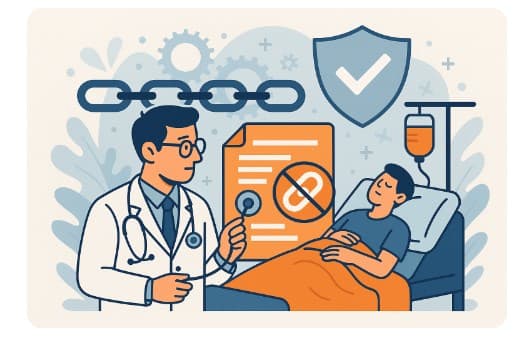
The Penalty Reality: It’s a Diagnosis, Not a Death Sentence
Before you can fix anything, you need to know exactly what you’re dealing with. Your first stop must be Google Search Console. Look for a “Manual Actions” report. If you find a message there, you have a direct directive from Google explaining what you did wrong. This is your diagnosis.
If the Manual Actions report is clear, your traffic drop is likely algorithmic. An algorithm has detected an issue, frequently within your backlink profile, and has automatically lowered your site’s position.
Knowing which scenario you face determines your entire plan.
A manual action requires a cleanup crew. You must prove to a human reviewer that you’ve identified and fixed the specific violations. An algorithmic hit, on the other hand, demands a reputation rebuild. You need to change the signals your site sends until the algorithm sees you as trustworthy again.
This distinction leads to the core principle of penalty recovery. It is always a two-stage operation. Step one involves a precise removal of the harmful links. Step two, which only happens after step one is finished, is about establishing a new base of credible, high-quality links. Adding new links to a damaged profile is a temporary fix that ignores the core issue.
Heading Change: The Non-Negotiable Cleanup
Before considering new links, you must address the existing ones. This means conducting a full backlink audit.
You pull a list of every link pointing to your site using tools like Google Search Console or Ahrefs. You are looking for the problematic ones—those from low-quality directories, unrelated sites, or link schemes. This is a detailed, manual process of evaluating each source.
Next comes the outreach.
You find contact information for each website and ask for the link to be removed. Expect silence from many. For the links that remain stuck, you use Google’s Disavow Tool. This tool asks Google to disregard those specific links. It is a final option, not an opening move.
The entire purpose of this phase is purely defensive.
You are not trying to gain ground but to stop the bleeding. Every toxic link you remove or disavow is a negative signal eliminated. This cleanup is the undeniable prerequisite for any chance of recovery. It is the “penalty recovery” part in its purest form.
Rebuilding with Purpose: The Long-Term Approach
Once the profile is clean, the work of rebuilding can start. This phase demonstrates to Google that your site now operates with integrity. Each new, legitimate link serves as a positive mark.
No shortcuts exist here. The method must be careful and principled. Relevance is everything. One link from a trusted source in your field carries more weight than a hundred from irrelevant pages. The aim is a natural-looking profile that mirrors your actual authority.
This is where a meticulous, project-based partner like Linkbuilding.services can provide a clear path. They avoid generic monthly plans, concentrating instead on obtaining specific placements—guest posts, contextual links—that fit a post-penalty plan. Each link is a conscious move to restore credibility.
The priority is strategic alignment, making certain each new link reinforces your site’s standing.
What to Look for in a Post-Penalty Link Building Partner
Choosing a partner after a penalty requires a different level of scrutiny.
Your site is vulnerable, and the wrong choice can make things much worse. The first thing to demand is absolute transparency. Any credible provider should be able to explain their methods clearly and, crucially, show you examples of the types of websites they secure links from. Vague promises are a major red flag.
Look for a service that prioritizes relevance above all else.
They should discuss your specific field and your customers. They should focus on websites where your content logically belongs. A promise of “50 links a month” should make you skeptical. The discussion should center on the strategic purpose behind each placement.
You need a clear plan, not a simple list. Avoid any provider offering a guaranteed overnight solution.
Google manages the recovery timeline. No third-party service can bend their process. A good partner knows the goal is lasting stability. They help create a foundation that not only fixes the current problem but also protects your site going forward.

Final Thoughts
A Google penalty feels like a major setback, but it also forces a necessary cleanup. The key takeaway is that professional link building services contribute to recovery not by piling on more links, but by expertly managing a disciplined two-part strategy: the essential removal of toxic links and the strategic acquisition of high-quality, relevant ones.
In the end, a penalty forces a necessary correction.
It’s a chance to fix errors and create a more honest, robust SEO foundation. Prioritizing genuine value over sheer numbers means you’ll end up with a website that is tougher and more reliable.
The objective isn’t to return to the old status quo. It’s to establish something more durable for the future.